Beji Temple Sangsit: North Bali’s Hidden Architectural Gem
Most visitors to Bali head straight for the island’s famous southern temples. So it’s easy to miss one of the most detailed and distinctive temples on the island, tucked into a quiet village near Singaraja. Beji Temple Sangsit, known locally as Pura Beji, is a 15th-century masterpiece that rewards travelers willing to venture north.
What Is Beji Temple Sangsit?
Pura Beji Sangsit is a Hindu temple dedicated to Dewi Sri, the goddess of fertility and rice. Built in the 15th century, it sits in the peaceful village of Sangsit, surrounded by rice fields rather than the busy tourist strips found further south. Unlike many temples on the island, its purpose ties directly to agriculture, reflecting the deep connection between Balinese spirituality and the land.
Why Its Architecture Stands Out
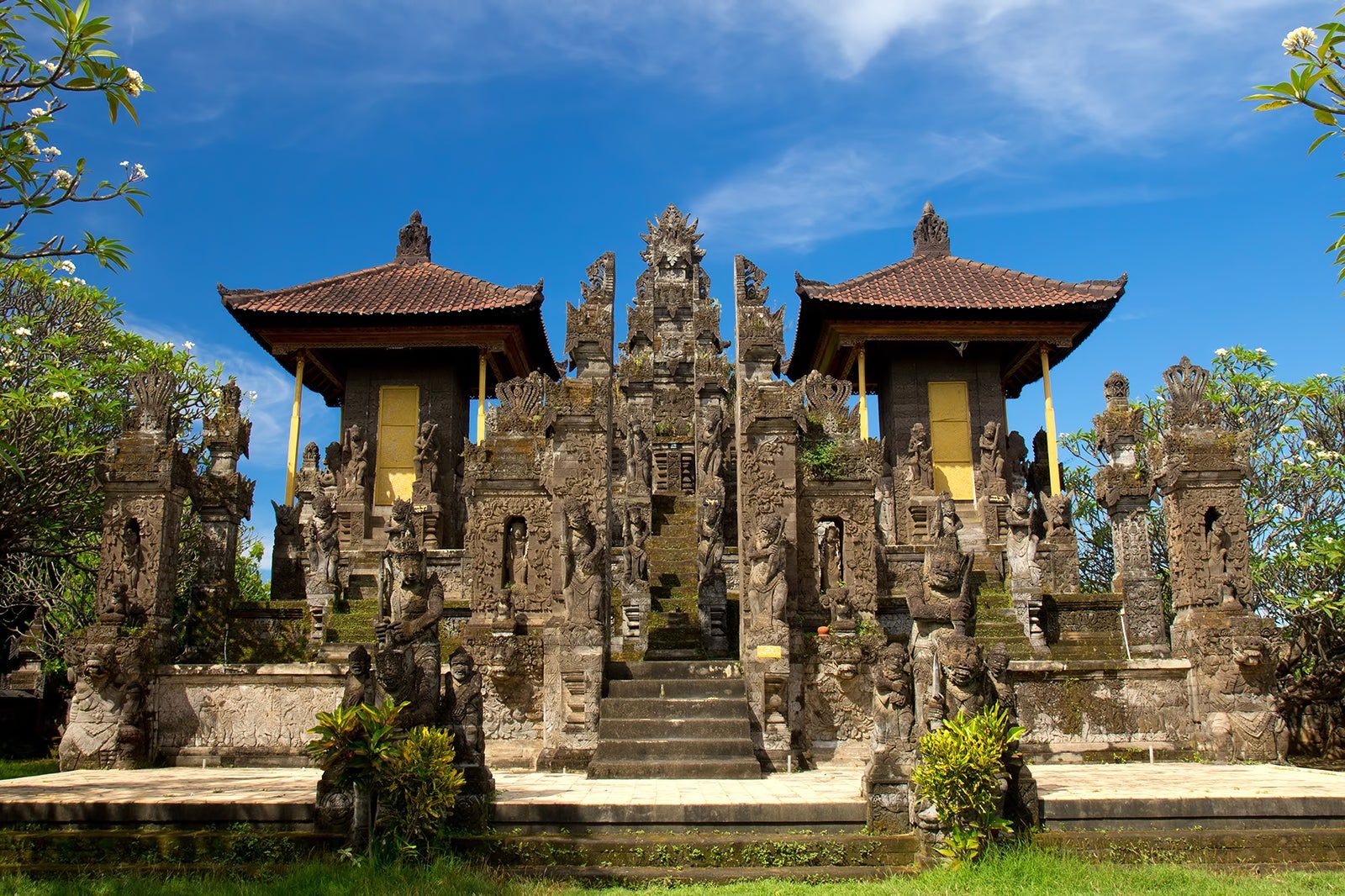
1. North Balinese carving style While South Bali’s temples often favor grey volcanic stone, Beji Temple is carved from pink sandstone, giving it a distinctly warmer, softer appearance. The carvings themselves are dense and intricate, covering nearly every visible surface with floral patterns, mythical creatures, and scenes from local folklore.
2. A different design tradition entirely North Bali developed its own architectural style, separate from the more commonly photographed temples of Ubud or Besakih. So a visit here offers a genuinely different visual experience, one that feels distinct rather than repetitive if you’ve already seen several southern temples.
3. A living connection to subak tradition The temple plays a role in subak, Bali’s UNESCO-recognized traditional irrigation system. As a result, visiting Beji Temple offers insight into more than architecture, it connects to how Balinese communities have managed rice farming for centuries.
What to See During Your Visit
- The main gate (candi bentar), elaborately carved and often considered one of the finest examples of North Balinese stone work
- The inner courtyard shrines, dedicated to Dewi Sri and surrounding deities
- Surrounding rice paddies, which frame the temple with a quiet, green backdrop rarely found at busier southern sites
Visiting Etiquette
As with any active Hindu temple in Bali, a few basics apply:
- Wear a sarong and sash, generally available to borrow at the entrance
- Speak quietly, especially if a ceremony is in progress
- Avoid touching carvings or statues directly
- Walk respectfully through courtyards rather than treating the temple purely as a photo backdrop
Why It’s Worth Adding to Your Itinerary
Because Beji Temple sits near Singaraja, it pairs naturally with other North Bali highlights rather than standing as a single, standalone stop. Most visitors combine it with a trip further inland, making for a day that balances architecture, culture, and nature in one route.
Our Singaraja Sekumpul Tour includes exactly this combination, a visit to Beji Temple Sangsit followed by the trek to Sekumpul Waterfall, giving you both the cultural and natural highlights of North Bali in a single day.
Final Thoughts
Beji Temple Sangsit doesn’t draw the crowds that South Bali’s temples do, and that’s exactly what makes it worth seeing. Its detailed pink sandstone carvings and quiet rice-field setting offer a side of Balinese architecture that most first-time visitors never encounter.
Ready to explore North Bali’s hidden architectural gem? Book the Singaraja Sekumpul Tour with Lovina Dream Trip and combine Beji Temple with the stunning Sekumpul Waterfall trek.